Interview by Thomas Rotolo and Safiya Hafiz
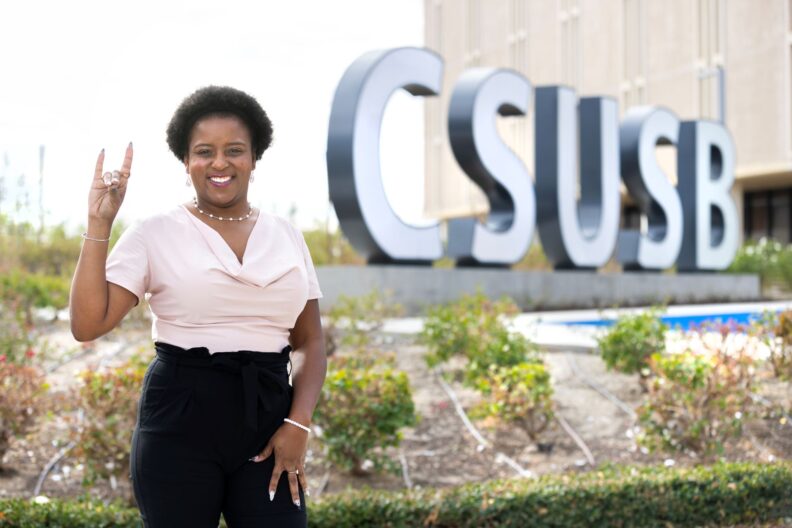
At the start of 2025, we caught up with Annika Anderson (PhD, 2015), an associate professor in the Department of Sociology at Cal State University, San Bernadino, where she teaches classes on deviant behavior, criminology, reentry, and race and ethnic relations.
Tom: Professor Jen Schwartz returned from the American Society of Criminology conference in November and said, “I saw Annika Anderson and she’s doing great.” Jen and I were thinking along the same track — let’s interview Annika to share with our sociology community. I’m thrilled that you can do this.
Why don’t we begin with reminding everyone when you arrived at WSU, and where you came from to get to the sociology department?
Annika: I arrived at WSU in 2008, earned my master’s degree in 2010, and the PhD in 2015.
I came to WSU from Penn State, where I earned a bachelor’s degree in public relations with minors in women’s studies, sociology, and international studies. I was recruited into the Department of Sociology at WSU as a McNair Scholar. One of the most attractive things about the graduate program at WSU is that the department provided a clear route from the BA to PhD.
After thinking about my work-life balance and productivity, it seemed as if WSU was the best fit. Pullman was a quiet, small town and so I figured I’d be very productive there. I was interested in the work of several faculty members, but as I tell my students now, you might want to work with people when you go to university, but you must be open to who’s there and the experiences that may arise.
Receiving the McNair scholarship that focused on research, I worked with Scott Frickel. To this day, the article that I wrote with him on social movements and the environment is my most cited piece, even though it’s not my area of expertise.
After my McNair scholarship finished that first year, I started working as a teaching assistant for Lisa McIntyre, learning about how to be a teacher and gaining experience with the Introduction to Sociology course. I remember after a year or so of being her TA, I said to her, “Oh man, now I have to teach.” She said something along the lines of, “You don’t have to teach, you get to teach.”
Lisa made it clear that teaching was a privilege. Even as the chair of the department, teaching was something that she loved to do. I can’t take for granted how much experience I got at WSU in terms of teaching because when I entered the job market, my teaching experience was something that was really attractive to all my potential employers. In graduate school, I had taught several different courses — other job candidates didn’t have the experience I had.
Looking back, several faculty at WSU propelled me forward in my career. I remember talking to Gregory Hooks about theory and his very vivid explanations of it. What I loved about his class is that he would have you write a final paper, but then hold oral examinations. He would ask, “Tell me about theory. Explain this to me.” It was just great talking to Greg. He was so animated and so fun to be around.
I have similarly fond memories of Gene Rosa. He was always ahead of the technology, always using some new gadget. He would tell students that being a professor is the best job ever. And that was something that stuck with me.
And, my chair, Jen Schwartz, got me really excited about criminology and gender and the intersection of the two, along with race and ethnicity. I really liked the criminology class. I remember after finishing the course, I thought,“this is it.” I just fell in love with the field of criminology, and then I decided to specialize in criminology and social stratification.
It’s interesting for me to 10 years later reflect on my being a tenured professor and the chair of sociology in my department. I’m very grateful.
Tom: You said that you realized the importance of teaching when you entered the job market. Tell us how the job search went and where you ended up.
Annika: I applied for many jobs. The process felt like a maze. I received mentorship from the Department of Sociology, but also mentorship outside of the department that helped me manage the process. I tell this to untenured faculty and students: you need mentors within the institution and outside the institution so that you can collect a diversity of experiences and the tools needed to be a professional. One of my important mentors from outside of WSU was Juan Battle, a past president of the Association of Black Sociologists. His family was from Pullman, so I became connected with him. He had all these templates in terms of what your curriculum vitae should look like, what your teaching and research statements should look like, and so on.
I was hired at Cal State University, San Bernadino (CSUSB) in May 2015, and I finished my PhD in August 2015. I literally started the job three weeks after getting my degree. I was a freshly minted PhD but at that point, no one knows what their identity is. You’re still used to taking on the classes in grad school.
When I arrived, I found that the community there had problems with homelessness, poverty, and crime. At that time, I was naive enough to think, oh, I can fix all these issues. I got it! Then, I realized that that’s just not how it works. Now, I feel like I have helped chip away at the problems, but I haven’t fixed them.
When I came to San Bernadino, I helped to co-launch a reentry program for people who have been incarcerated. My first semester, I started to work on this program, and I launched it in my second year. Everyone on campus was very supportive of the project. They’re telling me, “This is great. Do this.” But my external mentors were warning me, “You are an assistant professor. You probably shouldn’t be running a reentry program if you need to focus on getting tenure.”
Since 2016, I’ve been the executive director of this campus-based reentry program, Project Rebound, that helps people who are formerly incarcerated get into college. We go into prisons, we go into jails, we go into the community colleges. We even go into classes on campus recruiting people who are formerly incarcerated, helping them to figure out what their degree path is.
The idea is to help them get enrolled but also providing a wraparound service to make sure that we retain them. My two full-time staff members have master’s degrees in social work, and they do case management with each of our students. They find community resources and on-campus resources to help them. Some of the students experienced homelessness and substance abuse. For the most part, they’ve gotten past those issues, and it’s more of thinking about how to help them transform their education and degrees into careers.
The program intersects with my teaching, research, and service. I am strategic and intentional about publishing. With this participatory research model, I published with the people who are in my program. And I make sure I teach classes that are aligned with the program, so I created a class called Crime, Desistance, and Reentry. This allows me to review a book and teach about the subject at the same time. Everything overlaps very well.
Now, as a chair, if an assistant professor told me that they were thinking of something like this, I’d be like, no, no (laughing). I don’t know if you can do that. I don’t know if you should do this.
Tom: It’s great that you are engaged in work that matters, work that is making a difference to people’s lives in your community.
Annika: Thank you. I think many of us are trained to only publish and teach. Establishing and running this type of reentry program is definitely not the norm. I thought it was normal when I started because that’s my only orientation. I have found out throughout the years that this is not what professors do very often. But WSU sociology faculty had such a big impact on my work. I do hope that they are proud of the work I’ve done; I feel like they are.
Safiya: Would you tell us more about how you became interested in desistance?
Annika: For me, it was a combination of personal interest and reading the literature. I have people in my life who have been incarcerated. While I was taking Jen Schwartz’s class it seemed like there were so many explanations on why people committed crimes, but not as much focus on how we get people to stop committing crime. I was fascinated by what the literature had to say about that. People think about “three years clean,” like how many years have passed in terms of the time you haven’t committed a crime to say that you’ve actually desisted. There are debates in the literature about how to measure it. I address those debates when I teach my criminology course.
But for the most part, I started pivoting to the reentry part of it. Okay, so now if we can say that people successfully desist — what happens to them then? Sometimes you read something and then you get that spark. Also, you think about what’s missing from what you’re reading. And in all the things I was reading, I was wondering, “Why is no one talking about this?”
Safiya: Do you have advice for current graduate students?
Enjoy being in grad school because this is your time to explore. Graduate school is a unique time to explore all the different things that you’re interested in. After you become a professor, you tend to be a specialist, digging deeper into one topic area. It becomes more challenging to look into other research areas. Graduate school is the time to find your passion. Remember that your mentors are not just for that particular time. Grad school mentorship can be lifelong. The mentoring relationship will change. You’ll get to a point where you’re no longer just a grad student and you have to figure out how to engage with each other as professionals, like seeing Jen Schwartz at ASC meetings. I thought, “Wow, here I am ten years later.” I now have a different appreciation for the faculty.
Even though graduate school is difficult — let’s not pretend it’s easy — there are definitely great things that you can get out of it.