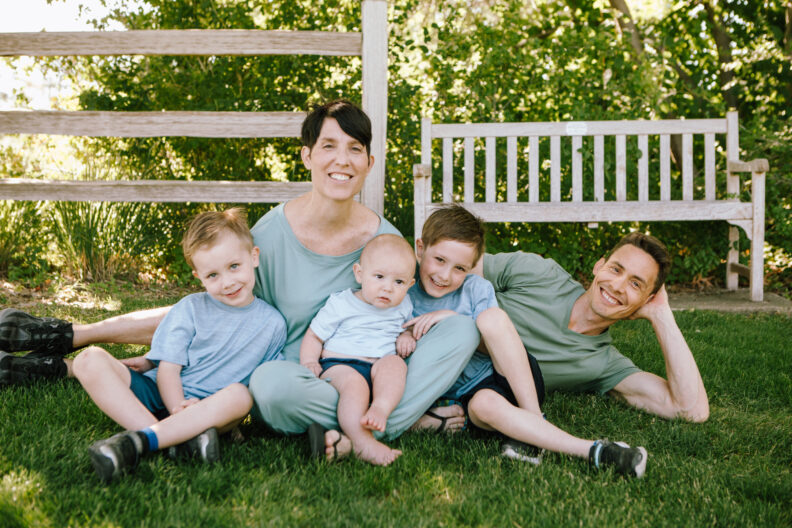
In this Alumni Spotlight, we catch up with Career-track Assistant Professor of Teaching Joseph Kremer, who graduated with his PhD from WSU in 2015. Joseph is actively involved in recruiting new majors for the department, and is the current chair of the Honors, Award, and Outreach committee.
Thomas Rotolo: First, tell us first how you got into sociology.
Joseph Kremer: My origin story, so to speak.
Thomas Rotolo: Yes, given your fondness for superheroes, we will call it your origin story!
Joseph Kremer: I started out wanting to be a marriage counselor when I was in high school. We had some friends who were licensed clinical social workers doing therapy and I thought their work sounded interesting. I attended what used to be called Western State College, which is now known as Western State Colorado University. The school is in the small town of Gunnison, in southwestern Colorado near the amazing mountains of Crested Butte. In my junior year, my first sociology social problems class basically blew my mind, it completely just changed my entire life. I applied to the graduate program at WSU and I was accepted. I still have my initial acceptance email from Tom in my inbox – he was the graduate director at that time.
Thomas Rotolo: What do you remember from your early years in graduate school?
Joseph Kremer: When I arrived in Pullman, I was struggling to identify an area of interest but eventually settled into a focus that combined the areas of crime and deviance, and environmental sociology. I ended up studying with Professors Jennifer Schwartz and Erik Johnson. I worked on an assistantship with Erik for a little bit of time, which was a great research experience where I learned a lot, especially database management. This was a large-scale research project, and I saw how the project started, and then proceeded through its many different phases.
I wrote my MA thesis on environmental crime and gender. I expanded on some of these issues in my dissertation, using EPA data to explore community-level demographics and sentencing outcomes for environmental crimes. This work led to my major solo publication, and it helped me land an assistant professor position at Luther College, a small liberal arts school in Iowa, in 2015.
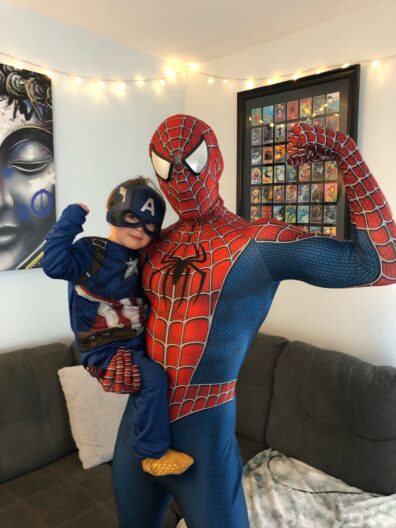
Eventually, my family and I had the opportunity to return to Pullman. In graduate school, I said if I could just stay here forever, I would, and we somehow got lucky enough to come back. It’s important to mention that I did not get to where I am today without the influence and amazing mentorship and support from Dr. Kristin Cutler. We’ve been on this amazing journey of sociology together, and we now have three children together. We are raising these little sociologists! It can become a bit chaotic trying to balance work and family, but I don’t think I’d take it any other way. We live and breathe sociology all day, every day around here. I know that might be too much for some people (laughs), but we also have balance in our work family lives.
Thomas Rotolo: Tell us about your current role in the department and WSU more generally. I know you’re very busy with many different things right now, and your enthusiasm for your work is unmatched in the department and you just mow down every challenge that’s put before you.
Joseph Kremer: I do enjoy my job a great deal. I have sociology to thank for my entire life, everything about where I am right now. When we initially moved back to Pullman in 2019, I was unemployed. Kristin was hired as the director of the online program in the department of sociology. I was hoping that I’d eventually get hired in the department, but in the meantime, I wrote a supernatural horror novel, which was something I always wanted to do. So, I cranked out four hours or more of writing a day until it was finished.
In 2019, I was asked to teach at WSU and at some other universities across the country in emergency scenarios where faculty could not teach their courses. I had to step in and completely start from scratch mid-semester four different classes, online and in person, at the same time. At WSU, in spring break of 2019, I got a call from the department at WSU and I was asked to teach the large SOC 101 course for the rest of the semester. So, I had been unemployed, and then a weekend later, I was responsible for four separate classes, and all of them turned out to be amazing. It was a nice trial by fire, but it demonstrated what I could do in the classroom. The people who hired me were impressed: who is this Joseph guy just turning classes upside down and fixing them? But that’s what I love to do.
I was eventually brought back full-time into WSU Sociology as a career track teaching assistant professor in 2020, around the time of the start of the pandemic when everything started to be taught remotely. I am the only teaching career track professor. I teach a 4-4 load, both online and in person, usually 300-400 students in a single semester. Additionally, I am actively involved in recruitment for the department, engaged in recruitment activities in many ways throughout the university.
Safiya Hafiz: Tell us about teaching. I feel like you’re always coming up with something new and innovative.
Joseph Kremer: I care greatly about teaching. Recently, I’ve been struggling with how to deal with AI use by students in the classroom. Without going into too much detail here, given our time constraints, I found a unique approach that I have been passing along to students and testing out. I think students have appreciated my attempts because it ultimately brings in openness and a fairness to instruction. More generally, I always make sure I’m being me in in the classroom. That’s the main thing, I just love talking sociology, trying to explode minds with cool information, as I remember my mind being melted at one point.
Using new technology in the classroom has always been one of my main strengths, bringing in pedagogical technologies that really enhance accessibility. I know that there are students who are less open to talking in large classes. Want to be quiet? That’s their style, but I want to hear from them, too, in a different kind of way and technology allows us to communicate with each other in the form of online discussions. I’ve tried some new techniques and observed great gains, such as facilitating discussions through an online engagement platform called Yellow Dig. Essentially this is very much a social media kind of idea, but it allows everyone to engage with the material. And I have structured it in different and ways that allow me to be more creative than Yellow Dig than originally intended. I can actually be part of the conversation. I’m not just assessing.
Thomas Rotolo: Do you have any final thoughts that you’d like to share?
Jospeh Kremer: Sociology and the department at WSU truly changed my life in every way possible. I have a lifetime of stories and connections. After 18 years since starting as a graduate student, I now get the chance to not only work with my great friend and life partner in the department, but I had mentorship from faculty who were at the top of their careers. I couldn’t ask for anything more.