Remembering Don Dillman (1941–2024)
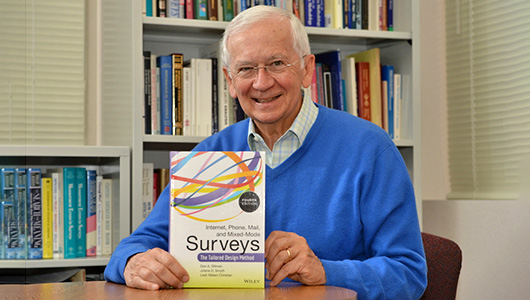
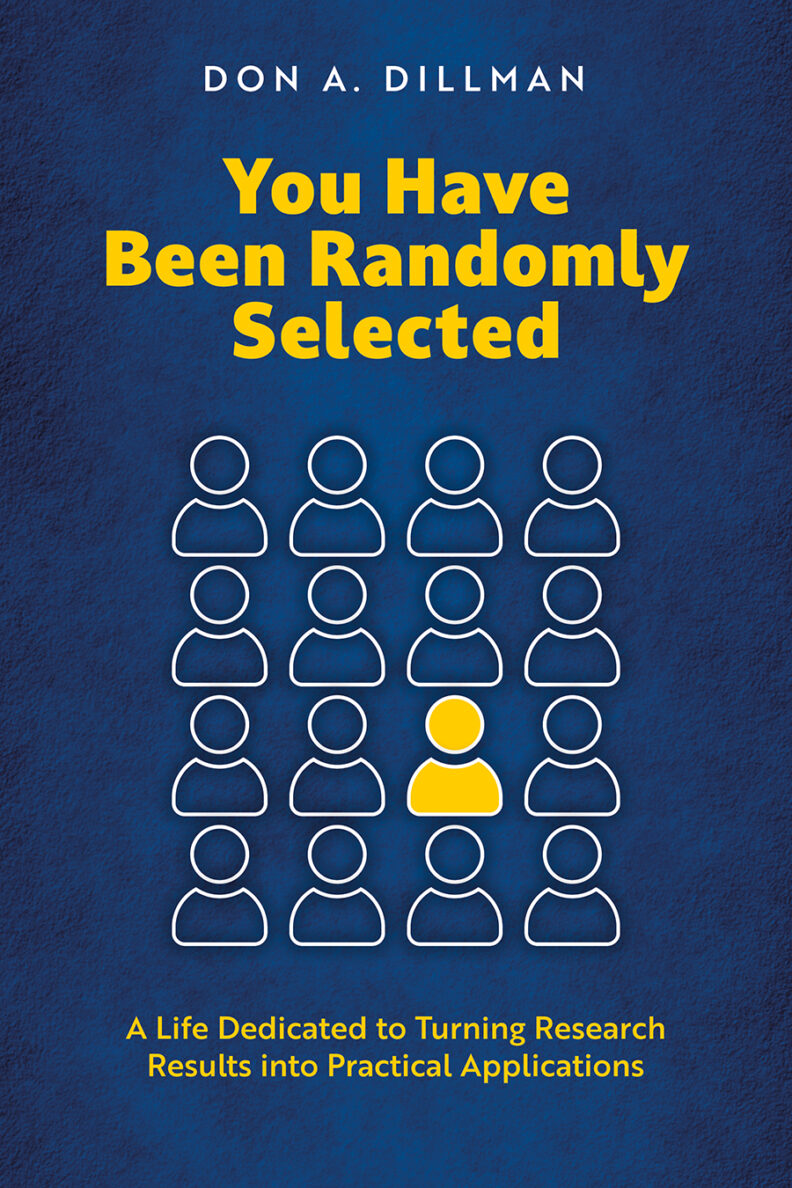
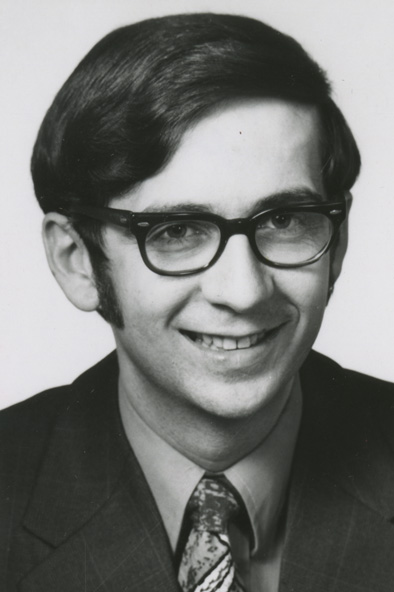
The department was deeply saddened to learn of Don Dillman’s passing in June. An obituary can be read online, and the College of Arts and Sciences published a wonderful retrospective of Don’s extensive career.
In addition to Don’s groundbreaking work in survey methodology, he was a wonderful mentor to generations of students. In this article, two sociology alumni, Leah Christian (National Opinion Research Center University of Chicago, PhD 2007) and Jolene Smyth (University of Nebraska-Lincoln, PhD 2007), along with current sociology graduate student Azdren Coma, share what Don meant to each of them. The editors are confident that your experiences with Don will resonate with many of the thoughts and memories shared by these three authors below.
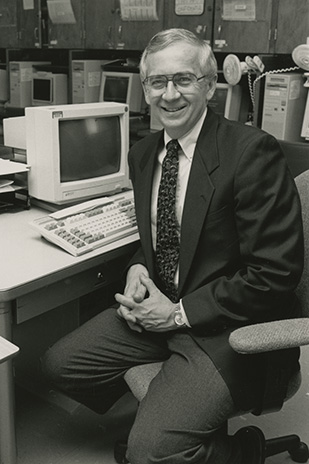
Leah Christian
Don Dillman was instrumental to my experience at Washington State University and working with him changed the trajectory of my career. Don taught me three important lessons that ultimately shaped who I am as a person and how I have grown in my career. Meeting Don and working with him showed me how to overcome obstacles and be open to new possibilities, the importance of focusing on the impact of our work, and to connect and collaborate with others in our research to make it stronger.
Don taught me to be open to change and consider opportunities that are presented to me. We often have thoughts about how our life and career may progress but ultimately, how we react and whether we embrace opportunities we may have never considered, can shape our future. My first year at WSU was a difficult one, learning that some of the professors I came to study with were leaving the university. I questioned whether I would be enabled to learn and grow in the face of this change, but it was Don who encouraged me to continue working with him as a graduate research assistant on his many survey projects, including groundbreaking work in web surveys, visual design, and mixed-mode surveys, even though it was not what I had come to WSU thinking I would do.
Don was patient and supported me to make my own decision, but if I had never been presented with this opportunity and never took the time to consider it, I may not have continued at WSU or likely have pursued a career in survey methodology. Being open to change and new possibilities was critical just a few years ago when I was approached by NORC at the University of Chicago about a senior vice president position leading their Methodology and Quantitative Social Sciences department. I had not been on the job market or looking to leave my position at Nielsen, but I made sure to pause and explore this opportunity given the importance of NORC’s work and the possibilities for my growth. I am glad I did. I have now been with NORC for nearly four years and am truly enjoying this new step in my career.
Another lesson I learned from Don is that the value of one’s work is ultimately measured through the impact it has on others. Don’s research was always tied to practical examples and applications. During his early research on visual design, some of his most compelling examples were real-world ones, including the 2000 Florida butterfly ballot and the DC metro system and map design. Our research was regularly informed by issues with surveys from numerous federal agencies: from Census to the Bureau of Labor Statistics, the National Science Foundation, and the United States Department of Agriculture. We designed experiments to test out different designs to address problems or potential issues identified by these surveys. It was this focus on applied research that Don instilled in me—the grounding of research in issues that society faces, and the interest in using social science research to help better understand society and ultimately inform change—that led me to pursue a career in applied research at different organizations. Don’s passion for answers to help real-world problems is what continues to fuel me in my career today.
Another one of the most significant things Don taught me was the power of collaboration. People coming together, exchanging ideas, having real debate and discussion, respectfully challenging each other, and ultimately coming to a better place, a stronger idea, put in better context and more fully justified. He built an inclusive and collaborative environment, making sure everyone was heard, pushing us to articulate our perspective and rationale better, and ensuring we knew we could challenge his ideas. In graduate school, Don let us lead projects—from design to data collection, analysis, and writing. He guided us and provided support, but also showed us how to be independent, how to design good research grounded in theory and practice, and ultimately how to communicate our research to a wide audience. These fundamental principles continue to underpin how I approach my work.
What I remember and treasure most about Don was not only these lessons he taught me but who he was as a person. He was always humble, even when reminded of his many accomplishments. He was someone who genuinely connected with others, listening to their ideas and sharing his own. Don treated everyone with the same level of attention, authenticity, and respect regardless of their background, and he was open to learning new things from everyone he met.
These important lessons are reflected and shaped in one of our many favorite Don quotes: “You’re only as good as your last six months.” This sentiment has encouraged me to stay focused on making a tangible impact and on motivating me to center growth and learning new things in my career. I must admit it has been hard to think about moving forward and the next step the past few months, but I feel that is also what Don would be encouraging us to do—keep reflecting and growing. Reminding ourselves to keep focused ahead and challenge ourselves to learn and grow in new ways.
Leah Christian joined NORC at the University of Chicago as the first-ever senior vice president of the Methodology and Quantitative Social Sciences Department in February of this year, overseeing and developing their research activities and methodological capabilities. Previously, Leah was the senior vice president of Data Science at Nielsen, and before this she was a methodologist at Pew Research Center. Leah received her master’s degree and PhD (2007) at WSU in the Department of Sociology. Leah is the co-winner of the prestigious AAPOR Warren J. Mitofsky Innovator’s Award for web-push data collection methodology and co-author of Internet, Phone, Mail, and Mixed-Mode Surveys: The Tailored Design Method with Don Dillman and Jolene Smyth.
Jolene Smyth
I am very thankful for the time I got to spend in the Sociology Department at WSU and for the mentoring and education I received and for the positive effect that experience has had on my career. While I owe a great deal of gratitude to others in the department as well, Don Dillman was instrumental in my experience at WSU and in my career after I graduated.
As a first-generation college student who grew up in rural Montana, I did not really understand what graduate school was about or how to go about transitioning from book learning to a professional career. I was really feeling my way along as I went.
In the spring of my second year of graduate school (spring 2003), I took Don’s survey research course. I found the content interesting and useful and enjoyed learning to do research better while also engaging my creative side a bit. So, in a move that was remarkably bold for me at the time, I asked for a meeting to see if Don would hire me as an RA for the summer.
I remember two things about that meeting: The first was sitting at the table in Don’s office sharing stories about growing up milking cows, which was not at all what I thought we would be talking about; the second was that I walked out with a summer job lined up. I was happy to have an income source over the summer—I had no idea that I would continue to work for Don for the rest of my time at WSU, that I would eventually co-author his book with him and Leah, that he would help me figure out my own career path and continue to mentor and support me in that career, or that we would come to see each other not just as collaborators but as friends.
With Don, I learned by doing. He had me analyze data, write papers, and usher them through the publication process. He had me help design experiments, including the tedious work of checking every word and detail to make sure we were not introducing confounds, and I also did the work of fielding the experiments. He made sure I signed cover letters, stuffed envelopes to prepare mailings, and knew how to track returns and prepare reminder mailings. I spent hours in the telephone lab listening to survey respondents to better understand how surveys were working. I’ll admit I experienced some of this work as drudgery at the time, but as I look back now, I recognize these experiences as gifts that have helped me throughout my career.
I also learned a lot from Don by observing how he worked. I always admired how he treated people with kindness and respect, and despite being at the top of the professional hierarchy, tried to learn from whoever he was interacting with. It didn’t matter if he was talking to the president of a professional organization, director of a federal statistical agency, a first-year graduate student, or a staff member. He was often both the most achieved person in a conversation and also the most humble and caring.
The kindness and care that Don had for others came through in his work as well. He spent a lot of time answering people’s survey questions by email, traveling and consulting to help different organizations or agencies improve their surveys, and teaching a variety of audiences how to do surveys well. He also insisted that each edition of his book be written to be accessible and thus useful to everyday practitioners, not just academics and professionals. To the extent that he was able, he made sure to include his students in the more public aspects of his work so that we could learn and benefit from it as well. Don provided a wonderful model of how to be a top-notch researcher, professor, mentor, and person.
From that first meeting when I convinced him to give me a summer job until the very end of his life, Don gave generously of his time and energy to help me grow as a person and a professional. What he did for me was remarkable, but what is more remarkable is that he made similar investments and had similar life-changing impacts on many other students and people in sociology and survey methodology throughout his career. I don’t know how he was able to do so much for so many, but I’m grateful to have been a part of it.
Jolene Smyth is a professor and chair of the Sociology Department at the University of Nebraska-Lincoln, with research interests in survey methodology and gender. Previously, Jolene was the director of the Bureau of Sociology Research at the university for almost a decade. Jolene received her master’s degree and PhD (2007) at WSU in the Department of Sociology. Jolene is the co-winner of the prestigious AAPOR Warren J. Mitofsky Innovator’s Award for web-push data collection methodology and co-author of Internet, Phone, Mail, and Mixed-Mode Surveys: The Tailored Design Method with Don Dillman and Leah Christian.
Azdren Coma
When I first met Don Dillman in 2018, I had no idea who he was or how much he would shape my career. Over time, I had the privilege of being mentored by Don in classrooms, in the hallways of Wilson-Short Hall, at the Social & Economic Sciences Research Center (SESRC) Survey Design Clinic, and on my dissertation after he agreed to be on my committee. As one of Don’s last mentees, I was asked to write about my experience with him as a mentor—a great honor for me. In this essay, I want to share a few key teachings. These are lessons that I hope to take as a potential mentor to future students:
- Don taught me that being a good communicator of science is just as essential as being a good scientist.
- He always kept an eye on the big picture.
- Don was always direct and honest with his feedback, offering critical insights when needed.
A note on lesson three: he did so respectfully in the form of a dialogue, always focused on improving science. Even this outline in the opening paragraph is a legacy of Don’s impact on my thinking.
The importance of being a good communicator
The first meaningful encounter with Don was in my first year as a graduate student in the professionalization seminar. One week, he came to give a talk and shared something called the “Ten Commandments of graduate school.” His advice would be practical things like, “Polish up on your quantitative skills because they are very much sought after in the job market.” And he would say, “Try to read beyond academic articles.” I learned that he loved reading the New York Times (NYT) and enjoyed reading science books that made NYT‘s best-seller list. I appreciated learning this about Don because reading outside academia is a habit easily lost once in academia.
I remember once an academic asking me what I had been reading over the summer. I shared that I was reading a Malcolm Gladwell book. They seemed unimpressed, saying that I should be reading more academic sociological literature. Shortly after, coincidently, I had a similar conversation with Don where we discussed our latest readings. Recalling my recent experience, I reluctantly shared with him that I had been reading a Gladwell book. I asked Don not to judge me. He then turned around and showed me several Gladwell books on his bookshelf, saying that there is a lot that we can learn from someone like Gladwell about communicating complex ideas to popular audiences. I thought that was something very profound and interesting, especially coming from someone like Don Dillman who had been an academic for more than fifty years at that point.
Don taught me that doing good science in my academic papers is just one-half of the struggle. The other half has to do with ensuring that you are telling a good story and that people understand and appreciate your writing. He had a similar message even when it came to designing surveys, saying that when writing a question, it needed to be more of a conversation and a dialogue and less of just a tool for the researcher to collect their data. Whether it was academic writing or survey design, Don emphasized that it is not about sounding academic but achieving the fundamental goals of our projects—whether it is about teaching the public about an interesting scientific phenomenon, or better understanding public opinions, or perceptions. Don pushed his students, to read widely—to talk with people outside of our areas of expertise., By keeping up with what is going on in the world from reading the news and other popular forms of writing, we become better science communicators and better thinkers.
During his retirement talk, Don shared the story of how he came up with incorporating Social Exchange Theory into his approach to survey design. He said that he didn’t come up with this theory on his own but that a colleague mentioned while passing in the hallway that he needed a theory behind his survey design approach and suggested Social Exchange Theory. Once again, this anecdote reflects Don’s character through how he acknowledges that he found his sociological theory through a spontaneous hallway conversation. More importantly, Don emphasized that we ought to strive to be open-minded beyond our own research areas.
Thinking about the broader goals of science brings me to the second point of this essay:
Always keep sight of the big picture
When I first met Don, he had been a faculty member in the sociology department for about 47 years. Yet, Don was humble, approachable, and down-to-earth—not what you’d expect from a giant in the field. What I appreciate about Don is that even though the subject of my dissertation was not something he was intimately familiar with, he would take a step back and ask the fundamental sociological questions, such as: what the goal of this research is; what is the purpose; what is the societal impact of this research; and does it bring value. In the scientific process, it is important to have people like Don who don’t get caught up in the details but rather remember to ask the bigger questions. He had a holistic approach to science, bringing to light not just the scientific impact but also the broader social impact.
Don’s remarkable humility enabled him to be open to unfamiliar or less developed ideas by others. During colloquiums, he would often ask the most meaningful questions to speakers, even though the topics were not something that he had done research on. As a member of my dissertation committee, he would not only point out the things that I needed to improve, but also gave compliments and praise on things he thought I was doing well. And to me, that meant so much because it gave me hope and motivation to continue working hard. I will never forget his comment that he thought the research I was doing was meaningful and important to the world. It was a simple comment, but I think about it often.
As a doctoral candidate, I am working on a degree with the goal of producing science and learning to become an effective scientist. Don is a constant reminder of the ultimate goals of what we are doing. Whatever our sociological research topic, we have this hope and dream that it might have a positive impact on the world.
I want to wrap up this section by highlighting that during Don’s retirement talk, he was asked who he was most indebted to. His answer was, with sincerity, his students. His answer to the question highlighted the importance of keeping an eye on the bigger picture by maintaining a respectful, collaborative relationship between mentors and mentees in academia and being motivated by learning from one another and contributing meaningfully to the world.
The essence of healthy dialogue and giving effective feedback
I want to share a story from Don’s graduate-level seminar, a Survey Practicum, which he last taught in the spring of 2021. It was a fascinating course that brought awe and wonder to the study of survey methodology. Don brought a wide variety of real-world examples, including the COVID-19 surveys, IRS surveys, the US Census, and more. I recall a debate in a class about a survey commissioned by the IRS. The survey had a minimal scale for measuring gender. Don guided the conversation about how to code gender in a way that encouraged students to think about the pros and cons of each approach. I thought it was great that he respected the various ideas and supported debate about the merits of them.
Practically, Don taught me to ask questions about whether each question served the goals that they were intended to serve. It’s something that is often not thought about by survey creators. But beyond just questioning the importance of including each question, Don took the time to give thorough feedback to his students. Don encapsulates what I think it means to be a good thinker, a good scientist, and a good mentor. I will always be grateful for having been mentored by him.
Azdren Coma is a PhD candidate in sociology at Washington State University, with a focus on environmental sociology and survey methodology. His dissertation explores public support for climate change mitigation and adaptation policies in the United States, reflecting his broader research interests in political polarization and environmental opinion. Azdren is also the creator of The Total Survey Design podcast.
Supporting Graduate Education
The Don Dillman Fellowship provides dissertation research funds for graduate students pursuing doctoral degrees in the department of sociology in some capacity at WSU. The fellowship honors Don’s commitment to supporting graduate students and their research, and his passion for improving survey research and other data collection methods. Thank you to all who have contributed to this fellowship thus far.
If you would like to support the Don Dillman Fellowship, gifts are welcome and can be made securely online. For more information about this and other giving options in the Department of Sociology, please contact the College of Arts and Sciences development team at 509-335-1096 or cas.development@wsu.edu.